If you’ve spent years moving temperature-sensitive freight across Australia, you eventually learn one thing:
The cold chain isn’t a system. It’s a discipline.
Every handover, every kilometre, every minute outside controlled conditions can decide whether a product arrives safe — or ruined. One small mistake early in the chain can’t be “fixed” later, and one moment of carelessness can undo an entire load.
And that’s why for experienced operators, maintaining cold-chain integrity becomes a non-negotiable habit.
This guide breaks down how the cold chain actually works — not from a textbook, but from the perspective of people who manage it every single day.
How the Food Cold Chain Really Works.

It’s a series of high-risk checkpoints where even a few seconds matter.
1. It Starts at the Source
Cold-chain success begins before the truck even arrives.
Food must be pre-chilled fast and verified at the right temperature.
If it’s abused here — the game is already lost.
2. Loading: Fast, Disciplined, Precise
A refrigerated truck is not a blast chiller. It maintains temperature; it doesn’t correct mistakes.
That’s why professionals focus on:
- Pre-cooled trucks
- Minimal door-open time
- Proper pallet spacing
- Temperature verification before departure
Simple steps — but powerful enough to save entire loads.
3. Transport: Where Real-Time Control Matters
This is the heart of the cold chain.
Experienced teams monitor:
- Live temperature data
- Door openings
- Equipment performance
One small fluctuation? They fix it before it becomes a problem.
4. Delivery: The Most Vulnerable Moment
Handovers can make or break the chain.
Professionals ensure:
- Quick transfers
- Temperature checks
- Prepared receiving storage
- Complete documentation
This final stage is where inexperience causes the biggest losses.
Why the Cold Chain Matters
A strong cold chain protects:
- Food safety
- Shelf life
- Brand reputation
- Compliance
- Customer trust
Businesses don’t just rely on logistics — they rely on dependability.
And that’s something companies like Iannelli Bros take seriously.
The Key Components of the Cold Chain
To work effectively, the cold chain relies on several interlocking elements:
- Pre-cooling & Packaging
- Freshly harvested or produced food often undergoes pre-cooling (rapid chilling) to remove field heat.
- Packaging is vital: insulated containers, gel packs, dry ice, or phase-change materials help maintain internal temperatures.
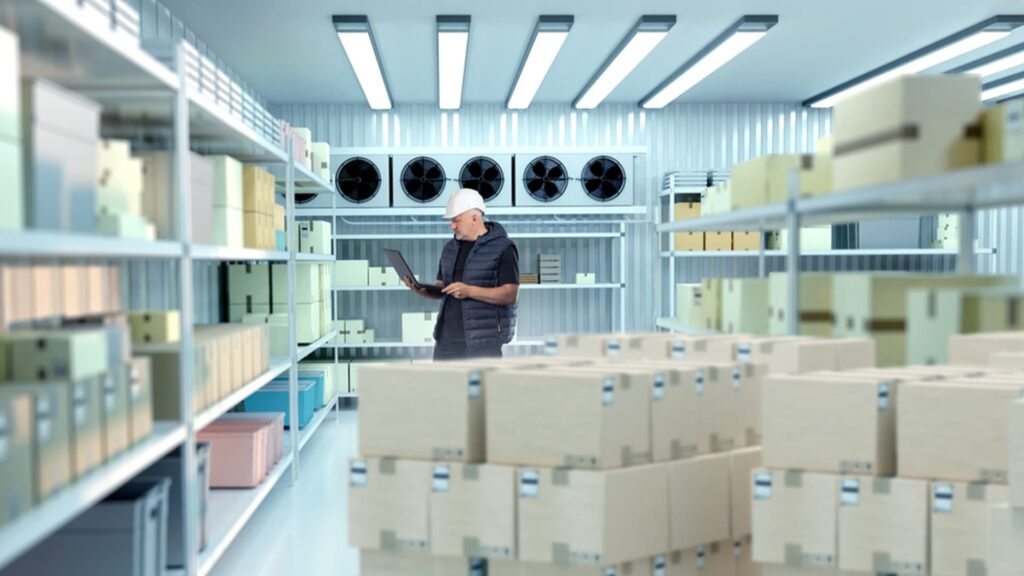
- Cold Storage (Warehousing)
- Once cooled, foods are stored in warehouses with precise temperature zones. These might include deep-freeze (< –25°C), frozen (–10 to –20°C), chilled (2–4°C), or controlled ambient (10–21°C), depending on the product.
- These facilities use specialised refrigeration systems and infrastructure designed to maintain stable, controlled environments.
For a deeper breakdown of how cold storage facilities actually work, see our full guide here: Complete Guide to Cold Storage Warehouses & Logistics Management.
- Temperature-Controlled Transportation
- Goods are transported in refrigerated trucks (reefers), containers, vans, or air-freight units.
- During transport, refrigeration units operate to maintain set temperature ranges. For example, frozen goods might be hauled at –18°C or colder; chilled produce at about 0–4°C.
- Vehicles are monitored continuously, often using GPS and temperature sensors, to detect deviations quickly and trigger alerts.
- Monitoring & Data Tracking
- Real-time tracking: IoT sensors, data loggers, and RFID tags collect temperature (and sometimes humidity) data throughout the journey.
- Alerts & corrective action: If temperature drifts out of range, the system can notify operations teams, allowing fast response.
- Data logging also supports traceability, quality audits, and regulatory record-keeping.
- Delivery & Last-Mile Handling
- When the goods reach their destination, they are promptly transferred into refrigerated storage again, minimising exposure to ambient temperatures.
- Staff at receiving points (warehouses, retailers) must also follow protocols to ensure that the chain isn’t broken.
Major Risks & Challenges in the Cold Chain
- Temperature Breaks: Even minor fluctuations can jeopardise quality or safety.
- Operational Costs: Refrigeration is energy-intensive. Cold storage, transport, and maintenance add up.
- Infrastructure Gaps: In remote or regional markets, limited cold-storage facilities make it hard to maintain an unbroken chain.
- Regulatory Burden: Proper record-keeping, audits, and compliance with food safety standards (e.g., HACCP) can be complex.
- Logistics Complexity: Switching between transport modes (e.g., road to rail), loading/unloading delays, or vehicle failures can threaten chain integrity.
At Iannelli, we tackle these by rigors temperature control, timely delivery, internet tracking, and vehicle maintenance.
Best Practices: Keeping the Cold Chain Strong
- Pre-Trip Preparation
- Pre-cool goods before loading.
- Use the right packaging and insulation.
- Make sure refrigeration units are calibrated and ready.
- Real-Time Monitoring
- Use IoT sensors and GPS to track both location and temperature.
- Set alert thresholds to catch temperature excursions early.
- Reliable Transport & Backup
- Maintain the refrigerated fleet rigorously.
- Use backup power (e.g., generators) for unexpected outages. CoolTrans invests in redundancy to reduce risk.
- Training & Standard Operating Procedures (SOPs)
- Trained drivers, handlers, and warehouse staff on cold-chain protocols.
- Use checklists for loading/unloading, temperature checks, and contingency steps.
- Documentation & Traceability
- Keep detailed logs, audit reports, and temperature history.
- Use systems that comply with food safety frameworks (e.g., ISO 22000, HACCP).
- Collaboration Across the Chain
- Align with suppliers, distributors, and customers.
- Share data, conduct joint reviews, and build contingency plans.
Why Experience Matters More Than Processes in Cold Chain Management
You can have the best SOPs, the best hardware, even the best temperature-controlled fleet, but none of it replaces people who’ve lived this work long enough to understand its pressure points.
After years in the field, you stop seeing cold-chain management as a checklist. You start treating it like a commitment. A commitment to safety, quality, regulation, and the customer relying on you at the end of the chain.
Why Businesses Trust Us With Their Food Cold Chain
When your product relies on temperature control, you don’t hire the cheapest provider; you hire the most dependable one. And dependability, in this industry, comes from experience.
Here’s what working with seasoned cold-chain professionals actually means for your business:
- We Understand the Science and the Reality of Food Temperatures
- We Maintain a Strict, Proven Cold Chain Process
- Real-Time Monitoring That Doesn’t Miss a Beat
- Trained Operators Who Treat Every Load Like It’s Critical
- Compliance, Safety & Documentation You Can Rely On
The Bottom Line: A Reliable Cold Chain Protects Your Product and also Your Reputation.
The food industry doesn’t forgive mistakes. One temperature breach can mean wasted stock, safety risks, or a damaged brand.
That’s why partnering with a cold-chain provider who has seen it all, solved it all, and prevented it all makes a measurable difference.
A strong cold chain isn’t just about keeping food cold.
It’s about keeping your business trusted and compliant while consistently delivering quality.
And at Iannelli Bros, we take that responsibility seriously. Whether you’re shipping seafood, dairy, or other temperature-sensitive foods, you need a partner who understands both the science and the strategy of cold logistics. Because when the chain stays strong, your food does, too.